The Patterns of Inheritance
It’s no secret that all of us possess cells, tissues, organs, and organ systems to create what is known as an organism, or the organism that is us. But all of these systems and complex, tiny units, also possess genes. Genes are passed down from parents to offspring, producing variations of traits, characteristics, alleles, and offspring. However, there are patterns to inheritance that affect the traits we use to describe ourselves.
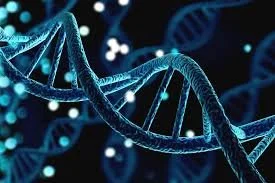
Double-Helix DNA
The patterns of inheritance were first discovered by Gregor Mendel, who realized that traits are transmitted from parents to offspring in specific patterns including dominant and recessive. What is the difference between a trait, a gene, and an allele? A trait is the variation in the physical appearance of a heritable characteristic, such as blonde or brown hair. Freckles or no freckles. Blue or brown eyes. Traits are shown from dominant or recessive genes. Genes contain specific DNA and codes that turn into a trait, but can also contain traits that would not be visible to the human eye. These are called recessive traits, while dominant traits are unchanged when inherited. Alleles are variants of genes that arise by mutation, and exist at the same location in homologous chromosomes. To put it simply, alleles are a different version of the same gene. Pretend you have chocolate, vanilla, and strawberry ice cream. They are all ice cream, the same gene, but the flavors vary. In humans, the gene for eye color contains alleles with specific variations of eye color like brown, blue, or green.
Dominant and recessive traits appear in both phenotypes and genotypes. What are those you ask? Phenotypes are the traits you can actually see. If you were to look at me you would be able to observe that I have blue eyes, pale skin, and lighter colored hair. Genotypes are an organism's underlying genetic makeup consisting of both physically visible and non-expressed alleles. For example, my mother has brown hair and green eyes. Although these traits are not seen on my body, my genotype still holds the alleles for these traits, meaning my offspring could potentially possess brown hair and green eyes. This is the law of dominance, meaning one trait will conceal the presence of another trait. In this case, blue eyes and light hair conceals brown hair and green eyes.
There are many laws when it comes to the patterns of inheritance. Including the law of segregation, which states that genes must divide equally into sex cells (gametes) so that offspring have an equal chance of inheriting either trait. The law of independent assortment states that genes do not influence each other when it comes to sorting alleles into sex cells (gametes), and every possible combination of alleles for every gene is equally likely to occur.
However, there are some extensions of the law of inheritance. Incomplete dominance is when one allele does not completely mask the other. Suppose one parent has curly hair and the other has straight hair. When incomplete dominance occurs, offspring will possess wavy hair. Another example is the green eye color, which blends brown and blue to create the lighter eye. Codominance is similar, but occurs when both alleles for the same characteristic or trait are simultaneously and fully expressed. An example would be the ABO human blood type.
So why is inheritance and gene variation important? Gene variation is the essential material for evolution to thrive, and without it natural selection would not be possible. All of us would not be able to adapt to new environments over time, and we would all look the same. Darker skin, for example, is prevalent in Africa due to the high UV. It acts as a protector of the skin to prevent sun damage, and can absorb more light than those with pale skin. That’s why people in Ireland are subjected to paler skin, because there is significantly less sunlight yet their skin still needs to absorb light. Gene variation is essential to sustaining life. Just like the jeans you wear, your genes come in all shapes, sizes, styles, and colors.
Source:
Fowler, Samantha, et al. Concepts of Biology. Rice University, 2023. Accessed 10 Jan. 2026.